7
The public perception of professional modeling often begins and ends with genetics. There is a pervasive myth that standing in front of a camera or walking down a catwalk is a passive exercise, requiring little more than symmetrical features and the right physical proportions. However, anyone who has ever stepped onto a high-stakes commercial set or navigated the chaotic backstage of a major fashion week understands that physical beauty is merely the baseline prerequisite for entry. The actual job of a working model is far more nuanced and demanding. It is an active, highly disciplined form of physical acting.
At the absolute highest levels of the fashion and commercial industries, the defining separator between a fleeting, beautiful face and an enduring, working professional is the mastery of confidence and the deliberate manipulation of body language. Modeling is the art of non-verbal communication, and without a commanding presence, even the most stunning garments fall completely flat.
The Psychology of Presence and the Camera Lens
The camera is an incredibly intuitive and unforgiving instrument. It does not simply record the physical features of a subject; it magnifies internal emotional states. When a model steps onto a set burdened by insecurity, hesitation, or the intimidation of working with a famous photographer, those internal feelings immediately translate into physical tension.
The physiological response to self-doubt is predictable: the shoulders naturally creep up toward the ears in a defensive posture, the jaw tightens, the breath becomes shallow, and the eyes lose their sharp focus. The lens captures this micro-tension instantly, rendering the resulting image stiff, uncomfortable, and entirely unconvincing. In fashion, if the model looks uncomfortable, the consumer will never aspire to buy the product.
Professional modeling, therefore, requires cultivating a psychological presence that reads as effortless authority. This internal confidence must be projected outward, regardless of the chaos or discomfort happening behind the scenes. A model might be wearing a heavy, stifling wool coat on a humid beach in July, or attempting to balance on towering stilettos on a slippery plexiglass runway, but their body language must communicate total ease, power, and dominance over their environment. This is why confidence is treated by top agencies as a highly technical, hirable skill rather than just an innate personality trait. It is the core engine that drives a model’s ability to take complex direction, experiment fearlessly with poses, and ultimately sell the narrative of the shoot.
Overcoming the Fear of the Awkward Transition
One of the clearest indicators of an inexperienced, unconfident model is the fear of looking foolish between frames. Novices tend to freeze in a single, predetermined “safe” pose, terrified to break their form and risk an unflattering angle. Professionals, rooted in deep self-assurance, understand that the true magic often happens in the fluid transitions between poses. They are willing to contort their bodies, test extreme structural angles, and risk an awkward frame to discover a dynamic, groundbreaking one. This level of kinetic freedom is impossible to achieve without a bedrock of unshakeable confidence in one’s own physical vocabulary.
Mastering the Mechanics of Spatial Awareness
Body language in modeling goes far beyond the basic directive to stand up straight. It involves a hyper-awareness of how limbs, joints, and angles interact with the lighting setup and the drape of the fabric. A professional model understands the precise geometry of their own body and knows exactly how to manipulate it to create compelling two-dimensional imagery from a three-dimensional form.
The Core and the Spine as Anchors
Every strong, authoritative pose originates from the body’s core. A collapsed spine translates to low energy and apathy on film, whereas an elongated, fully engaged torso projects vitality and strength. However, this does not mean standing at rigid military attention, which reads as unnatural. The goal is controlled elongation—lifting through the crown of the head while keeping the breath steady and the chest open. This subtle elongation creates necessary space between the ribs and the hips, making tailored garments fall perfectly and lending a quiet, undeniable power to the model’s stance.
Intentionality in the Extremities
Amateur models frequently forget about their hands and feet, letting them dangle awkwardly at their sides or clench into nervous, tight fists. In professional fashion photography, the extremities are critical storytelling tools. A hand gently resting against the jaw conveys intimacy and softness, while an angular, flexed wrist can give an editorial image a harsh, avant-garde edge.
Similarly, the placement of weight on the feet determines the entire structural line of the body. Shifting weight entirely to the back leg allows the front hip to drop, instantly creating an elongated, elegant S-curve that brings life and shape to a static garment. Every single micro-adjustment, right down to the tension in the fingers, must be executed with deliberate intent.
The Runway: Kinetic Energy and Spatial Command
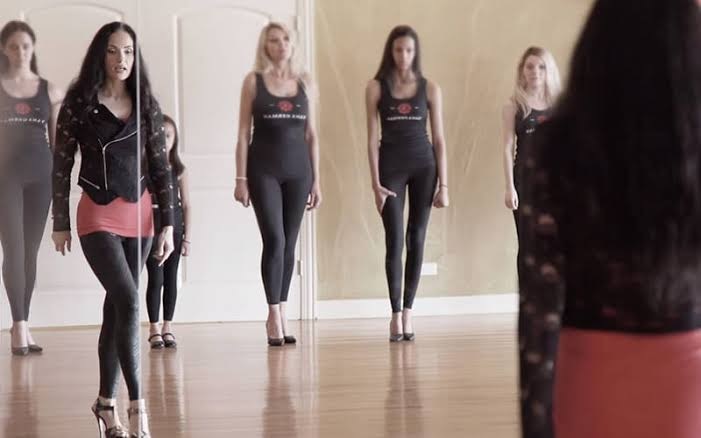
While photographic modeling requires manipulating static frames, runway modeling is an intense exercise in sustained kinetic energy and spatial command. The runway is an intimidating, high-pressure environment; hundreds of industry insiders, critical buyers, and aggressive photographers are scrutinizing every single step. In this arena, body language is everything. The walk must serve to showcase the clothing, but the model’s confidence must sell the exclusive lifestyle associated with the designer’s brand.
A powerful runway walk relies on a heavy, grounded, and rhythmic stride coupled with an almost immovable upper body. The hips and legs do the physical work, driving the body forward with aggressive purpose, while the shoulders remain relaxed and pushed back. This stark contrast between a driving, powerful lower half and a calm, statuesque upper half creates the mesmerizing illusion of gliding down the catwalk.
Furthermore, the model’s gaze is paramount to their spatial command. A gaze that drops to the floor to check for tripping hazards, or one that darts nervously into the audience, instantly breaks the illusion of exclusivity. Professional runway models employ a fixed, penetrating gaze—often aimed just above the heads of the wall of photographers at the end of the catwalk. This piercing eye contact projects an aura of untouchability and supreme confidence that elevates the designer’s entire collection.
Adapting Body Language to Brand Identity
Perhaps the most lucrative skill a professional model can develop is the ability to adapt their body language to suit wildly different brand identities in a matter of hours. True confidence allows a model to become a physical chameleon, shedding their personal default posture to adopt the exact persona required by the client’s creative brief.
Consider the vast difference between a high-fashion editorial campaign and a commercial athletic wear shoot. In a high-fashion context, the required body language is often abstract, angular, and emotionally detached. The model might use asymmetrical poses, harsh body lines, and a stoic, unreadable facial expression to convey luxury and exclusivity. The confidence required here is cold, distant, and fiercely untouchable.
Conversely, an athletic or commercial lifestyle brand requires a warm, highly accessible brand of confidence. The body language must be expansive, fluid, and grounded in realistic, joyful movement. The model needs to project health, energy, and approachability through open shoulders, genuine laughter, and relaxed, welcoming hands.
A model lacking internal confidence will default to the exact same three or four poses regardless of what they are wearing or who is paying them. A true professional reads the garment, understands the target demographic, and completely rewires their physical vocabulary to match the narrative. They know that they are not just serving as a human hanger displaying fabric; they are embodying an attitude and a lifestyle.
The modeling industry is notoriously grueling, characterized by relentless rejection, intense physical demands, and exhausting travel schedules. Sustaining a long-term career in this environment requires an internal fortitude that matches the required external aesthetics. Physical features will inevitably change with time, industry trends will rapidly shift, and aesthetic standards will evolve. What remains remarkably constant throughout the decades is the enduring power of a magnetic presence.
When a major client books a professional model, they are not just paying for their precise physical measurements. They are paying for the total assurance that when the studio lights turn on, this individual will immediately take control of the frame. They are investing heavily in the model’s ability to communicate non-verbally, to solve spatial problems on the fly, and to project an irrefutable sense of self-assurance that makes the consumer want to be them. Ultimately, confidence and intentional body language are not just supplementary skills for a professional model. They are the foundational tools of the trade, transforming a simple photograph into a captivating piece of visual art and turning a conventionally attractive individual into an unforgettable icon.