11
The fundamental challenge of any gathering, from a high-stakes corporate gala to an intimate wedding reception, is moving attendees from a state of polite observation to genuine engagement. An event can boast world-class catering, breathtaking floral arrangements, and a meticulously curated playlist, but if the guests remain clustered in their pre-existing social circles, the atmosphere will inevitably feel flat. Event planners and hosts constantly search for organic ways to break the ice and encourage mingling without forcing awkward networking exercises upon their guests.
In this pursuit of authentic connection, the modern photo booth has emerged as an incredibly powerful tool. Far removed from the cramped, curtained boxes of retro shopping malls, today’s photo experiences are open-air, technologically advanced social hubs. They do not merely capture memories; they actively manufacture them by serving as a highly effective catalyst for guest interaction.
The Psychology of the Shared Space
To understand why a camera and a backdrop can transform the energy of a room, one must look at the psychology of social friction. Entering a room full of strangers, or even casual acquaintances, triggers a mild defense mechanism in most adults. We naturally gravitate toward the familiar, seeking out the people we already know to avoid the vulnerability of initiating a cold conversation.
Lowering the Social Barrier with Props and Play
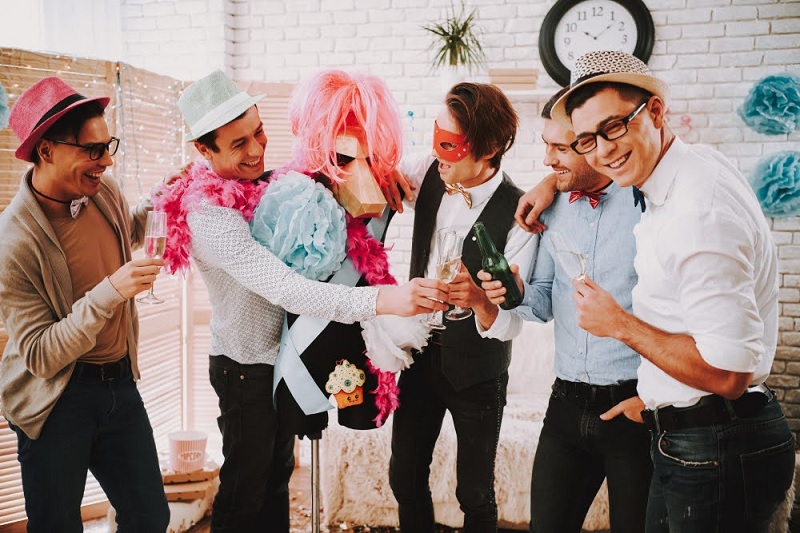
The photo booth operates as a designated zone of permission. When guests step in front of the lens, the standard rules of formal adult behavior are temporarily suspended. The introduction of physical props—oversized sunglasses, feather boas, or custom-printed signs—acts as a powerful social lubricant. Props provide a shared focus, offering guests an immediate, low-stakes topic of conversation.
Handing a colleague a ridiculous hat or coordinating a pose with a distant relative requires communication and collaboration. This shared vulnerability, wrapped in a layer of humor, instantly dismantles professional facades and social anxieties. For introverted guests who might struggle to make small talk over a cocktail, the structured activity of taking a photo provides a clear, highly approachable way to participate in the celebration.
The Democratization of the Guest List
Very few elements of an event possess universal appeal across all demographics, but a photo experience is a rare exception. It bridges generational divides effortlessly. At a wedding, it is entirely common to see a group of college friends enthusiastically pulling the bride’s grandparents into a shot. At a corporate holiday party, the interactive nature of the booth can temporarily erase organizational hierarchies, allowing entry-level employees and senior executives to share a moment of levity. By providing a universally understood activity, the photo booth acts as a great equalizer, bringing disparate groups of people together in a shared physical space.
The Queue as a Strategic Networking Zone
In almost every other aspect of event design, waiting in a line is considered a failure of logistics. A long line at the bar or the buffet breeds frustration and impatience. However, the queue for a popular photo booth functions entirely differently. Because the activity at the end of the line is inherently entertaining, the wait becomes part of the experience rather than a hurdle to overcome.
As guests wait their turn, they naturally watch the groups ahead of them. This creates a spectacle, transforming passive attendees into an engaged audience. The line itself becomes a micro-mixer. Guests who have never met will spontaneously strike up conversations, commenting on the poses of the people currently in the booth, offering to hold drinks, or plotting out their own creative concepts for their upcoming turn. The shared anticipation turns a static queue into a dynamic environment where organic introductions happen effortlessly.
Modern Innovations: Moving Beyond the Printed Strip
The evolution of photo booth technology has dramatically expanded how guests interact with the experience and with each other. While the classic printed photo strip retains a strong nostalgic charm, modern iterations demand a higher level of group coordination.
The Choreography of 360-Degree Video
The rise of the 360-degree video booth has completely changed the physical dynamics of the experience. Instead of standing still and smiling, guests step onto a platform while a high-speed camera orbits around them. This requires active choreography. Groups must quickly communicate and plan their movements—who is throwing confetti, who is dancing, and who is striking a dramatic pose. This rapid-fire collaboration forces guests to interact closely, generating a burst of kinetic energy and laughter that spills back out onto the event floor once their session is finished.
Digital Sharing and the Exchange of Contact Information
In a highly connected world, the immediate delivery of digital content is a baseline expectation. Modern booths allow guests to instantly text, email, or Airdrop their photos, GIFs, or looping videos directly to their smartphones. This digital infrastructure subtly facilitates networking.
It is incredibly common for a group of new acquaintances to take a photo together and then realize they need to share the digital file. The phrase “text that to me” has become the modern, informal equivalent of exchanging business cards. Whether it is a corporate conference where attendees are looking to expand their professional network, or a social gathering where new friendships are forming, the digital delivery system of a photo booth provides a natural, non-intrusive reason for guests to exchange contact information.
Architectural Flow and Room Dynamics
The physical layout of an event space dictates how people move and interact. If the only points of interest are the bar and the dance floor, the crowd will inevitably clump into two dense, impenetrable masses, leaving the rest of the room feeling empty and devoid of energy.
Strategic placement of a photo booth fundamentally alters the architectural flow of the gathering. It establishes a powerful secondary anchor point, pulling traffic away from congested areas and encouraging guests to explore the venue. When placed thoughtfully—perhaps near an outdoor terrace or in a slightly secluded lounge area—the booth acts as a beacon. As guests travel back and forth between the primary entertainment and the photo experience, they cross paths with different groups of people, increasing the sheer volume of incidental social collisions. This continuous movement prevents the energy of the room from stagnating and ensures that the atmosphere remains vibrant from the beginning of the evening to the very end.
The Tangible Memory as a Conversation Starter
While digital sharing is crucial, the physical printout remains an incredibly potent tool for interaction throughout the duration of the event. When a guest walks away from the booth holding a high-quality physical photograph, that item instantly becomes a conversation piece.
Returning to a dinner table or a high-top bar table with a fresh photo strip naturally prompts questions from other guests. People lean in to see the pictures, laugh at the poses, and inevitably ask, “Where did you get that?” The physical print serves as visual proof of fun, creating a fear of missing out that drives a steady stream of new participants toward the booth. This cycle of experience, documentation, and sharing transforms a solitary activity into a continuous loop of social engagement that permeates the entire room.
An unforgettable event is never defined simply by the aesthetic details of the venue; it is defined by the quality of the connections made within those walls. A well-executed photo experience transcends its basic function as a camera. It acts as an architectural feature, an icebreaker, and a subtle engine for social engineering. By providing a dedicated space for playfulness, collaboration, and shared memory-making, it gently pushes guests out of their comfort zones, ensuring that they leave the event not just with a photograph in their pocket, but with new connections and a genuine sense of shared celebration.