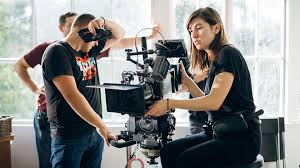
The professional camera market has entered a new phase where image resolution and color reproduction alone no longer define quality. Cinematographers now pay close attention to the way cameras interpret motion, particularly during fast movement, handheld tracking shots, and high-frame-rate capture. One of the most critical factors shaping how motion is rendered is the sensor readout architecture, specifically the difference between rolling shutter and global shutter designs.
Understanding this distinction is essential for filmmakers choosing between cinema systems for documentaries, sports coverage, narrative filmmaking, commercial production, and VFX-heavy workflows. This article explores how shutter architecture affects motion fidelity, color consistency, and perceived realism, and offers insight into selecting the right camera technology for different creative objectives.
Why Motion Rendering Has Become More Important Than Ever
The demand for visually smooth and realistic motion has increased due to advances in:
-
High-resolution large-format cinematography
-
Larger LED volume productions and virtual sets
-
Handheld gimbal, drone, and car-rig cinematography
-
High-speed capture used in advertisements and sports broadcasting
As image quality improves, unnatural motion artifacts become more noticeable to the viewer. A camera may deliver excellent color and detail, yet look artificial or distracting during movement if its readout system introduces motion distortion.
Understanding Rolling Shutter and Its Visual Behavior
Most digital cinema cameras use a rolling shutter, meaning the sensor reads the image line-by-line from top to bottom rather than capturing the entire frame in a single instant.
Visual Traits of Rolling Shutter
-
Vertical lines skew or lean during fast panning
-
Moving objects appear stretched or warped
-
Flashing lights or strobes produce partial exposure bands
-
High-speed drone and car footage may exhibit image wobble
These effects are commonly referred to as jello distortion or skew, and while sometimes subtle, they can become severe in dynamic scenes.
Why Rolling Shutter Is Still Widely Used
Despite its limitations, rolling shutter sensors remain common because they often deliver:
-
Higher dynamic range
-
Better low-light sensitivity
-
More efficient heat and power performance
-
Lower noise floor and broader tonal gradation
For narrative filmmaking, where motion pacing is carefully controlled, rolling shutter is not inherently problematic. Many Oscar-winning cinematography projects have been shot on rolling-shutter cameras with no perceptible issues.
What Makes Global Shutter Different
A global shutter captures the entire frame simultaneously. Instead of scanning pixels line-by-line, it exposes every photosite at the same exact moment, preserving object shape and spatial geometry regardless of movement.
Key Benefits of Global Shutter
-
No motion skew, even during rapid panning
-
No jello distortion in handheld energetic cinematography
-
Clean results in strobe, LED wall, and concert lighting environments
-
Accurate geometry for VFX match-moving and CGI integration
This is why global shutter cameras are often preferred for:
-
Action filmmaking
-
Sports and wildlife coverage
-
Aerial cinematography
-
Motion capture and VFX workflows
-
Scientific and industrial imaging
The Trade-Off: Global Shutter vs Rolling Shutter in Image Quality
While global shutter solves motion distortion issues, implementing it has traditionally come with trade-offs.
Potential Limitations of Global Shutter Sensors
-
Lower dynamic range compared to rolling shutter alternatives
-
Reduced sensitivity in low-light environments
-
Slightly increased noise levels in shadow regions
-
Higher cost of sensor manufacturing and development
However, new-generation global shutter cameras, such as RED KOMODO and Blackmagic PYXIS, have made significant strides in mitigating these drawbacks, offering image quality much closer to high-end rolling shutter cinema systems.
Why Cinematographers Choose One System Over the Other
Choosing between shutter types depends heavily on the creative goal of the production.
When Rolling Shutter Is the Best Fit
-
Dramatic narrative cinematography where movement is measured
-
Commercial beauty work where lighting control is optimized
-
Projects requiring maximum dynamic range for atmospheric lighting
-
Low-light scenes where tonal depth is critical to mood
When Global Shutter Is the Best Fit
-
Action films with fast camera movement
-
Live event broadcasting under unpredictable lighting
-
Handheld documentary or run-and-gun filmmaking
-
Drone cinematography where vibrations amplify distortion
-
VFX workflows requiring accurate physical geometry in frames
In many cases, filmmakers now use both systems strategically throughout the same production depending on scene requirements.
Additional Sensor Readout Considerations Beyond the Shutter Type
Even among rolling shutter cameras, performance varies widely. What truly matters is the readout speed.
-
Fast readout reduces distortion and produces smoother motion.
-
Slow readout amplifies skew and jello artifacts.
Manufacturers improve readout performance using:
-
Parallel processing pipelines
-
Higher-bandwidth ADC circuits
-
On-sensor buffering and hybrid analog-digital encoding
This is why some rolling shutter cameras behave almost like global shutter during motion, especially at higher frame rates.
How Lighting and Shutter Behavior Interact
Lighting flicker becomes a problem when shutter and electrical frequency are not harmonized. Global shutter maintains consistent exposure across the entire frame, making it more reliable for:
-
LED walls used in virtual production
-
Concert and nightclub sequences
-
Stage performances with synchronized strobes
-
Car commercials filmed under highway LED lighting
For rolling shutter cameras, cinematographers may need special flicker-free fixtures or adjusted shutter angles to avoid banding.
Future Trends in Shutter and Sensor Technology
Several technological developments are reshaping motion capture capabilities:
-
Stacked and backside-illuminated sensors improving readout efficiency
-
Hybrid shutter systems that mimic global shutter behavior electronically
-
Improved analog circuitry increasing dynamic range on global shutter designs
-
AI-assisted motion reconstruction emerging in post-production pipelines
The gap between the two shutter architectures is narrowing, and we are moving toward a future in which cinematographers will choose sensor behavior as a creative preference, not a technical compromise.
Conclusion
Understanding how shutter architecture affects motion rendering is essential for filmmakers working in today’s fast-paced, mixed-format production environments. The choice between rolling shutter and global shutter designs is not about which technology is superior. Instead, the question is which imaging behavior best supports the artistic and physical demands of the scene being captured. By considering motion characteristics, lighting conditions, subject behavior, post-production requirements, and desired emotional tone, cinematographers can make intentional, expressive decisions that elevate the visual storytelling experience.
FAQ
1. Does a global shutter always provide better video quality?
No. Global shutter improves motion accuracy but may reduce dynamic range or low-light performance depending on sensor design.
2. Can rolling shutter artifacts be reduced in post-production?
Yes, specialized software can reduce distortion, but results may vary and cannot fully restore accurate geometry in severe cases.
3. Do higher frame rates reduce rolling shutter skew?
Higher frame rates often reduce visible distortion because the sensor reads frames more quickly, improving temporal consistency.
4. Why do LED lights cause flicker on some cameras?
LEDs pulse according to electrical frequency. If the camera’s readout exposure does not align with this frequency, flicker and banding can occur.
5. Are global shutter cameras better for drone cinematography?
Yes, because drone vibrations amplify rolling shutter distortion, making global shutter the preferred choice for aerial footage.
6. Do most cinema cameras still use rolling shutter?
Yes, because rolling shutter sensors typically offer superior tonal depth and dynamic range, which remain critical for narrative storytelling.
7. Can cinematographers switch between shutter types within the same production?
Absolutely. Many productions mix camera systems to match scene requirements, motion style, and post-production goals.